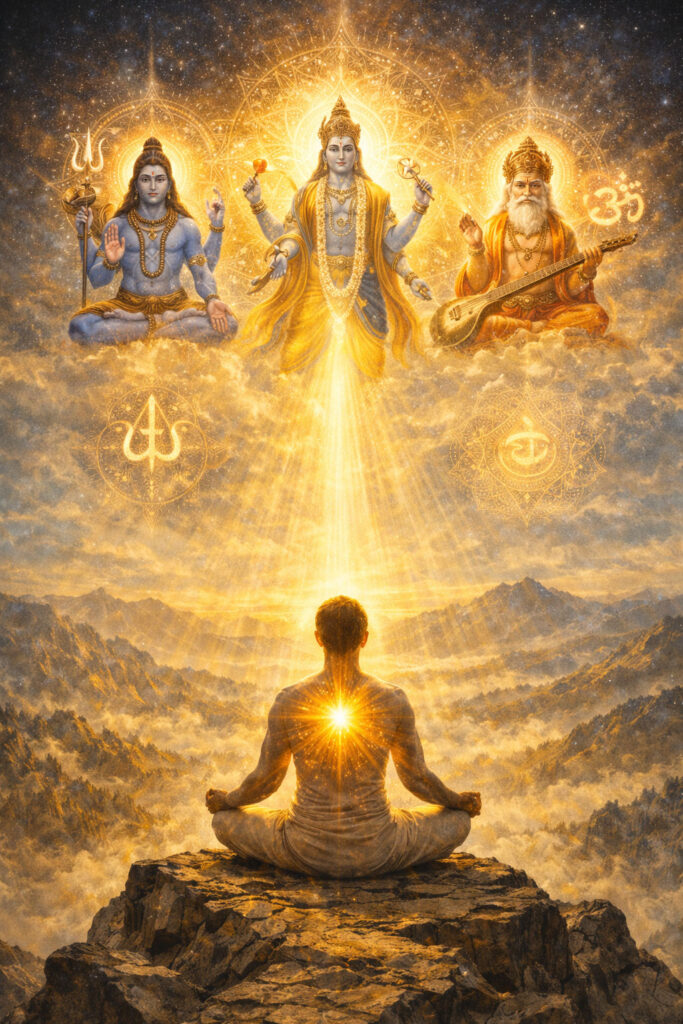
Shiva: The Uncreated Source and the Reflection of the Self
Within the vast, intricate tapestry of Sanatana Dharma (often called Hinduism), the figure of Lord Shiva stands as a paradox—both terrifying and gracious, ascetic and householder, destroyer and regenerator. To understand Shiva is to move beyond mythology and into the realm of metaphysics, where he becomes the living symbol of the ultimate reality, the Absolute Self. Central to this understanding is his identity as Svayambhu (Self-Begotten) and Anadi (Without Beginning).
Shiva is not merely a deity among many. Shiva is Tattva—the fundamental principle of existence. To understand Shiva is to go beyond mythology and enter the realm of inner realization. Likewise, to understand the concept of the Self-Begotten is to understand Shiva within oneself.
The relationship between Shiva and the Self-Begotten is not symbolic alone—it is experiential, existential, and eternal.
Who is Shiva? The Multifaceted Absolute
Shiva is not merely a god among gods in a polytheistic system. He is one of the principal forms of the Supreme Reality (Brahman), often envisioned as the transcendental consciousness that pervades all existence. His traditional depictions reveal his nature:
- The Ascetic (Mahayogi): Smeared with ashes, seated in deep meditation, he represents the triumph over desire and the immersion into pure consciousness. He is the source of all yoga and spiritual knowledge.
- The Destroyer (Mahakala): As part of the Trimurti (with Brahma the creator and Vishnu the preserver), Shiva is the force of dissolution. This destruction is not negative; it is the necessary dissolution of illusion, form, and the old cycle to make way for regeneration.
- The Lord of the Dance (Nataraja): In his cosmic dance, he is the dynamic heart of the universe—creating, preserving, destroying, concealing, and bestowing grace, all within the circle of cosmic fire and timelessness.
- Ardhanarishvara: The form that is half-female (Shakti) and half-male, embodying the non-dual truth that consciousness (Shiva) and creative energy (Shakti) are inseparable.
Beneath these roles lies a foundational principle: Shiva is the unchanging, eternal substratum upon which the drama of creation, preservation, and dissolution plays out.
Shiva is pure awareness (Chaitanya), untouched by creation, preservation, or destruction—yet allowing all three to happen.
Shiva is not someone you worship to reach God; Shiva is the state where the worshipper disappears.
Shiva: The Unborn, the Self-Existing
One of Shiva’s most important attributes is that He is Svayambhu—self-born, self-existing.
The term “Self-Begotten” or “Uncreated” is crucial. In many theological systems, a first cause or creator is postulated. In the metaphysics of Shaivism (the tradition centered on Shiva), Shiva is that first cause, but with a profound difference: He is uncaused.
This is crucial.
- Shiva is not created by anyone.
- Shiva does not depend on lineage.
- Shiva does not inherit identity.
The “Self-Begotten” (Svayambhu) Nature of Shiva
- Beyond Cause and Effect: Shiva is Anadi (without beginning) and Ananta (without end). He is not born from another being, nor does he depend on any prior cause. The Shiva Purana explicitly states that Shiva manifests through his own will and power (svatantrya). He is the independent reality that exists by its own nature.
- The Source of the Trimurti: While Brahma is credited with creation, scriptures like the Linga Purana describe that Shiva first creates Brahma and empowers him to create. Similarly, he is the source from which Vishnu’s preserving power flows. Thus, the creator and preserver emerge from the transcendental destroyer/dissolver.
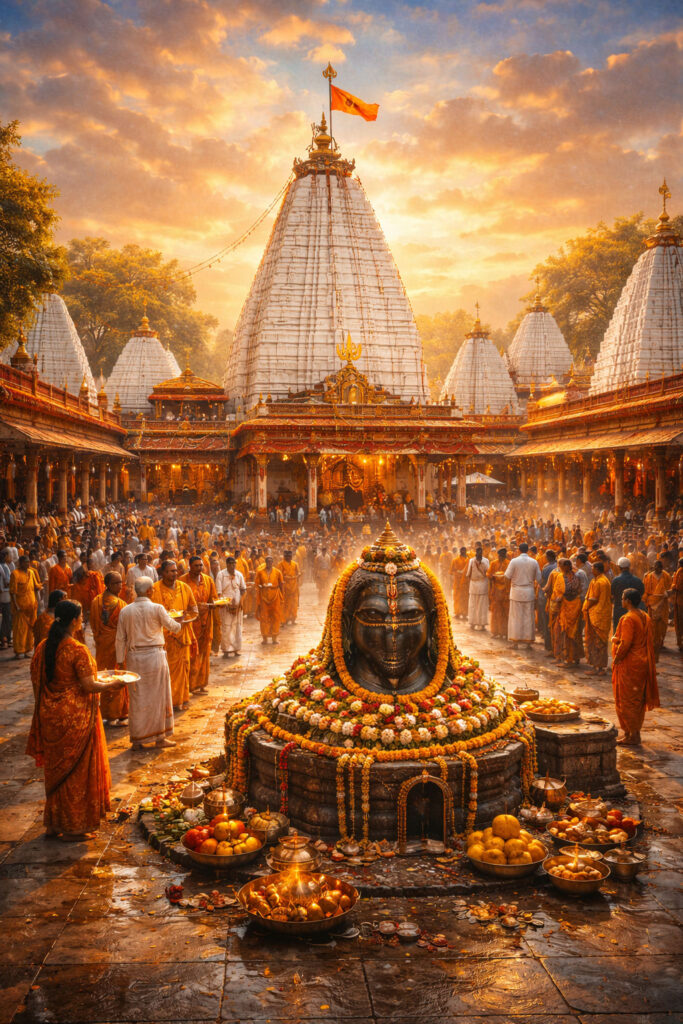
- The Lingam as Symbol: The Shiva Lingam, often misunderstood, is the ultimate symbol of the Self-Begotten. It is an aniconic (formless) representation of the pillar of light (Jyotirlinga) with no top or bottom—signifying a reality that is uncaused, without origin or end, and indefinable.
What Does Self-Begotten Mean in Sanatan Dharma?
In Sanatan Dharma, rebirth is not limited to the body. A person may be born physically once, but born consciously later.
A Self-Begotten being is one who:
- Is no longer a psychological product of society
- Is not ruled by ego, fear, or conditioning
- Has awakened inner responsibility and awareness
- Lives from the Self, not from borrowed identity
Shiva as the Archetype of the Self-Begotten
Shiva represents the ultimate Self-Begotten state.
He is:
- Fatherless
- Motherless
- Without social identity
- Without fear of isolation
- Without need for validation
Shiva lives in cremation grounds—not because He is destructive, but because He is free from attachment to form.
A self-begotten individual walks the same inner path:
- Letting false identities die
- Facing inner darkness without escape
- Standing alone without loneliness
- Living truth without compromise
Shiva Lingam: The Symbol of Self-Begotten Consciousness
The Shiva Lingam is often misunderstood.
In truth, it represents:
- The formless within form
- The source without origin
- The Self arising from itself
The Lingam is not created—it emerges. This emergence symbolizes consciousness realizing itself.
This is the essence of being self-begotten.
The Inner Marriage of Shiva and Shakti
A self-begotten being is incomplete without balance.
Shiva represents:
- Awareness
- Stillness
- Witnessing
Shakti represents:
- Energy
- Action
- Manifestation
When awareness (Shiva) unites with disciplined energy (Shakti), a complete human being is born—one who acts in the world without being consumed by it.
This union is the goal of Yoga.
Why Shiva Is the Ideal for Modern Seekers
In today’s world of identity crisis, noise, and moral confusion, Shiva represents:
- Inner authority over external approval
- Truth over comfort
- Silence over argument
- Responsibility over blame
A self-begotten person in modern society does not escape life; they purify life.
That is Shiva’s way.
Shiva and Service to Society
Contrary to misunderstanding, Shiva is not anti-society.
Shiva:
- Drinks poison to save creation
- Protects balance
- Destroys ignorance, not life
- Grants liberation, not escape
A self-begotten individual influenced by Shiva:
- Works silently
- Serves without ego
- Acts without craving recognition
- Upholds Dharma without hatred
Final Reflection
To walk the path of the Self-Begotten is to walk the path of Shiva—not in appearance, but in awareness.
Shiva is not distant in Kailash.
Shiva is present wherever:
- Ego dissolves
- Truth stands alone
- Awareness awakens itself
When a human being gives birth to their own consciousness, Shiva is no longer worshipped—He is lived.
That is the deepest relationship between Shiva and the Self-Begotten.
“He is the one God, hidden in all beings, all-pervading, the Self within all beings, watching over all works, dwelling in all beings, the witness, the perceiver, the only one, free from qualities.”